
Checking Criminal History in Buffalo County
A useful Buffalo County criminal record search begins with the event, not with one broad name query. The Police to Citizen portal, known as P2C, covers recent jail entries, active warrants, published reports, and closed calls. Nebraska's JUSTICE system holds filed County Court and District Court cases. The Nebraska State Patrol supplies the statewide Record of Arrest and Prosecution, or RAP. Those sources may overlap, but none replaces the others.
Use a full legal name, date of birth when the official form permits it, a case or incident number, and a narrow date range. Name spelling is vital. A Buffalo County booking is an event record, while a RAP depends on fingerprint submission and disposition reporting. Follow these steps to keep those record layers straight:
- Start with P2C for a recent Buffalo County booking or active warrant.
- Search JUSTICE for the related misdemeanor, felony preliminary matter, or felony trial file.
- Contact the shared KPD and sheriff Records Unit for an incident report not published online.
- Order an NSP RAP when a certified statewide Nebraska history is needed for personal review.
- Compare the disposition with the court file and ask the source office to correct a proven error.
The Buffalo County government homepage shows the county office directory used to identify the proper custodian.
The county directory is a sound starting point when a record must come from a clerk, sheriff unit, prosecutor, or another Buffalo County office.
Buffalo County Sheriff Report Custody
A local detail prevents many requests from going to the wrong desk. The Buffalo County Sheriff's Office and Kearney Police Department have shared the Law Enforcement Center since July 1993. The sheriff handles communications and dispatch for both agencies, while KPD Records performs records and data processing for both. A Buffalo County sheriff accident or offense report therefore goes to the shared Records Unit, not to the court clerk or detention center lobby.
The official sheriff page explains the joint operation and connects users to inmate and booking services.
That shared arrangement also explains why one records phone line serves reports created by KPD and the Buffalo County Sheriff.
KPD and BCSO Records Unit
2025 Avenue A, Kearney, NE 68848
308-233-5250
Monday through Thursday, 8 a.m. to 5 p.m.; Friday, 8 a.m. to noon
Buffalo County Courts
1512 Central Avenue, Kearney, NE 68848
County Court: 308-236-1228
District Court: 308-236-1246
Wait at least 48 hours after an incident before asking for a routine report. Give the incident number when possible. The desk charges $5 for counter or fax copies and $7 by mail with a self-addressed stamped envelope; a published P2C report is free.
Nebraska Official Background Checks
The Nebraska State Patrol Criminal Identification Division maintains Patrol Criminal History, the state's central fingerprint-based repository. Its public RAP is a name search of Nebraska fingerprint-linked arrests and dispositions reported to CID. Online, mail, and in-person requests cost $30. A public report excludes categories restricted by state law. A complete report with otherwise excluded material requires the subject's notarized release.
The official page above explains all three request routes and the limits of the result.
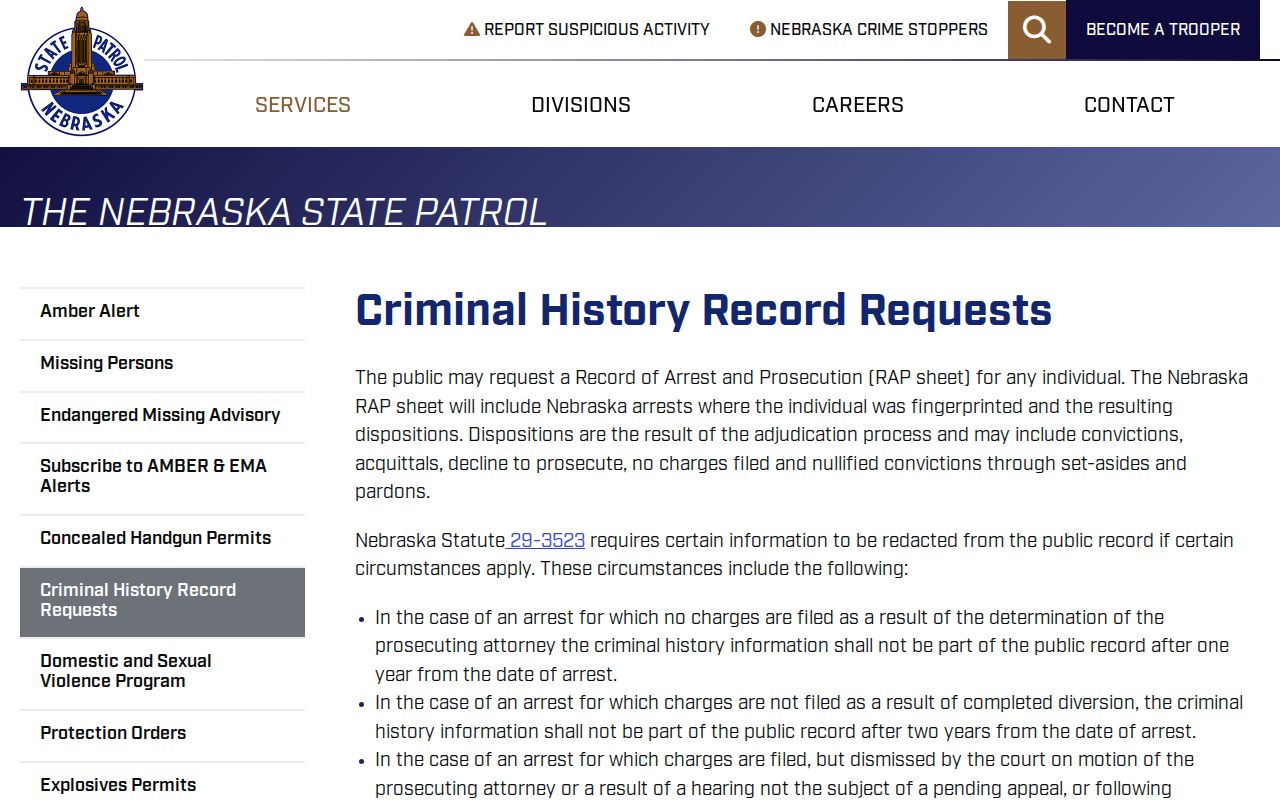
For self-review, the required subject fields are first name, last name, birth date, sex, and race. Optional identifiers can help distinguish close matches. A no-record result can be immediate; a result sent for technician research may take up to three business days. Online orders are not refundable, even after an input error or no-record result.
| Official product | Scope | Current fee |
|---|---|---|
| NSP RAP | Nebraska fingerprint-based adult arrests and reported outcomes | $30 |
| JUSTICE one-time search | Nebraska trial court case records | $17 |
| Courthouse JUSTICE terminal | Party-name or case-number court search | Free |
| Buffalo County civilian prints | Fingerprint capture only | $20 |
Buffalo County P2C Arrest Records
P2C is the fastest first check for recent Buffalo County criminal records tied to custody, warrants, and routine public police material. Its separate tools include Inmate Inquiry, Wanted List, Reports, Daily Bulletin, and current closed calls. A closed call is a dispatch event, not proof of an arrest. A wanted-list entry is active court process, not a conviction. Confirm a warrant with the sheriff or issuing court because a web result may lag recall or clearance.
The official P2C Wanted List exposes filters for name, race, sex, issue date, and charge.
Use those filters to narrow a possible match, then contact the Buffalo County Sheriff at 308-236-8555 before relying on the status. Never attempt to detain someone shown in the list.
- Booking
- Jail intake that records identity, property, presented charges, and current custody.
- Warrant
- Court process authorizing an arrest; it does not decide guilt.
- Incident report
- The originating agency's account of a reported event and its investigation.
- Disposition
- The result of a charge, such as dismissal, acquittal, or conviction.
Criminal Record Types
One Buffalo County event can create several records. The arresting agency writes an incident or arrest report. Jail staff create the booking record after intake. The County Attorney reviews the report and may file a charge, which creates a court case. If fingerprints are taken and sent to NSP CID, the state repository adds an arrest cycle and later links a reported disposition. Each file has a different custodian and can update on a different schedule.
- Police and arrest reports: held by the agency and, for KPD or sheriff matters, processed by shared KPD Records.
- Booking records: held by the Buffalo County Detention Center and shown through P2C when public.
- Court cases: held by County Court for misdemeanors and felony preliminary work, or District Court for felony trials.
- State RAP entries: held by NSP CID and based on fingerprint-linked Nebraska events.
- Registry records: held in the separate Nebraska Sex Offender Registry and updated through sheriffs.
For detail on pleadings, hearings, and judgments, use the Buffalo County criminal court case search. The court record is the best place to learn how a filed charge ended.
Buffalo County RAP Record Gaps
A $30 NSP RAP is authoritative for what Nebraska's fingerprint repository can report, but it is not a complete map of every Buffalo County police contact. It can miss an out-of-state event, a citation without fingerprints, an arrest card that was never transmitted, or a disposition that has not yet matched to the arrest cycle. Public dissemination limits may also remove a qualifying non-conviction event after the statutory period.
The NSP authorized fingerprinting list describes checks that state or federal law permits for specified official purposes.
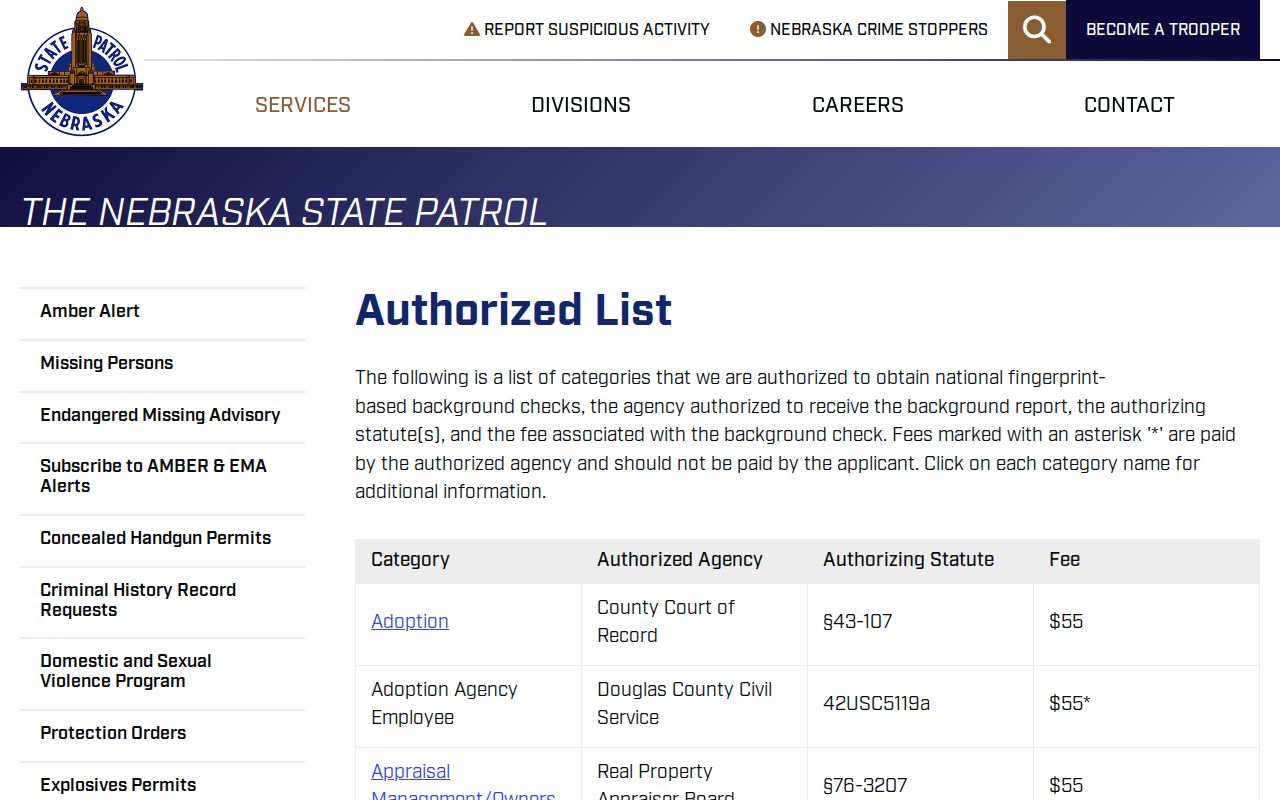
Those authorized checks require the proper sponsoring channel and new prints. Buffalo County civilian fingerprint service only captures prints; it does not by itself create an NSP or FBI result. For personal review, compare the RAP with JUSTICE and the source agency's report. If an item is wrong, the court or agency that supplied it must send the correction to CID.
Inside a Buffalo County Criminal Record
The contents depend on the source. JUSTICE case detail can show the court and case number, parties, offenses, costs assessed and paid, register of actions, filed documents, hearings, orders, notes when applicable, and many nonconfidential document images. P2C adds current booking and custody fields. An NSP RAP organizes identity details, fingerprint-linked arrest cycles, charges, and reported dispositions.
| Name and identifiers | Names, aliases, and match data allowed by the official system. |
|---|---|
| Arrest and booking | Agency, date, intake, held-for agency, release, and presented charges when public. |
| Case activity | Complaint or information, hearings, motions, orders, and the register of actions. |
| Disposition | Dismissal, acquittal, plea, conviction, or another recorded charge outcome. |
| Sentence | Custody, fine, probation, restitution, or other terms entered by the court. |
| Restrictions | Sealed files, juvenile information, protected identities, and confidential data are withheld or redacted. |
Read entries in time order. A complaint alleges an offense. A booking lists what was presented at intake. Neither is the final judgment.
Buffalo County Custody Record Locators
Custody records split by government level. P2C shows current or recent Buffalo County jail bookings. The Nebraska Department of Correctional Services Incarceration Record Search covers state prison custody. The federal Bureau of Prisons locator covers federal incarceration from 1982 onward. A person absent from one tool may be in another system, released, transferred, or under supervision rather than confined.
The official NDCS locator is the correct state prison search.
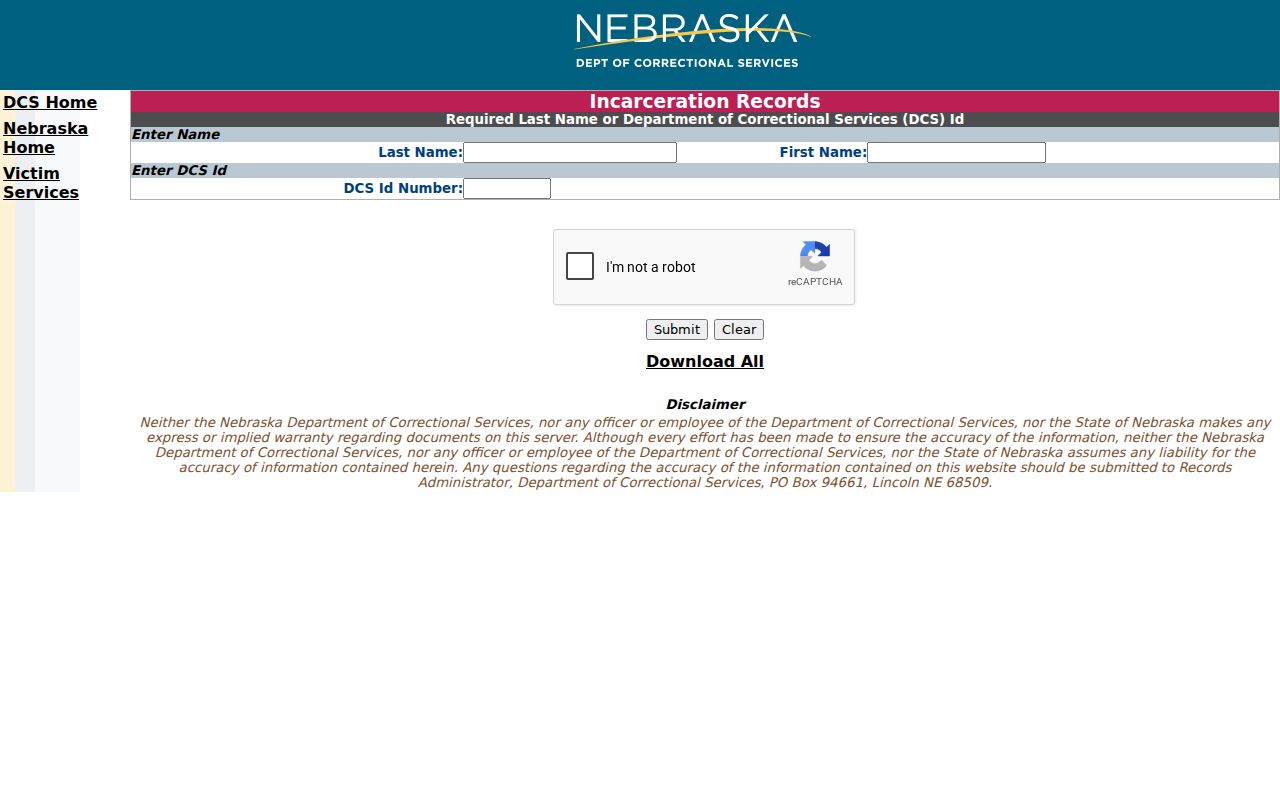
NDCS does not replace the Buffalo County jail roster. It reports state incarceration, while the county portal answers present local custody questions.
The official BOP locator accepts federal register identifiers or a name with optional demographic filters.
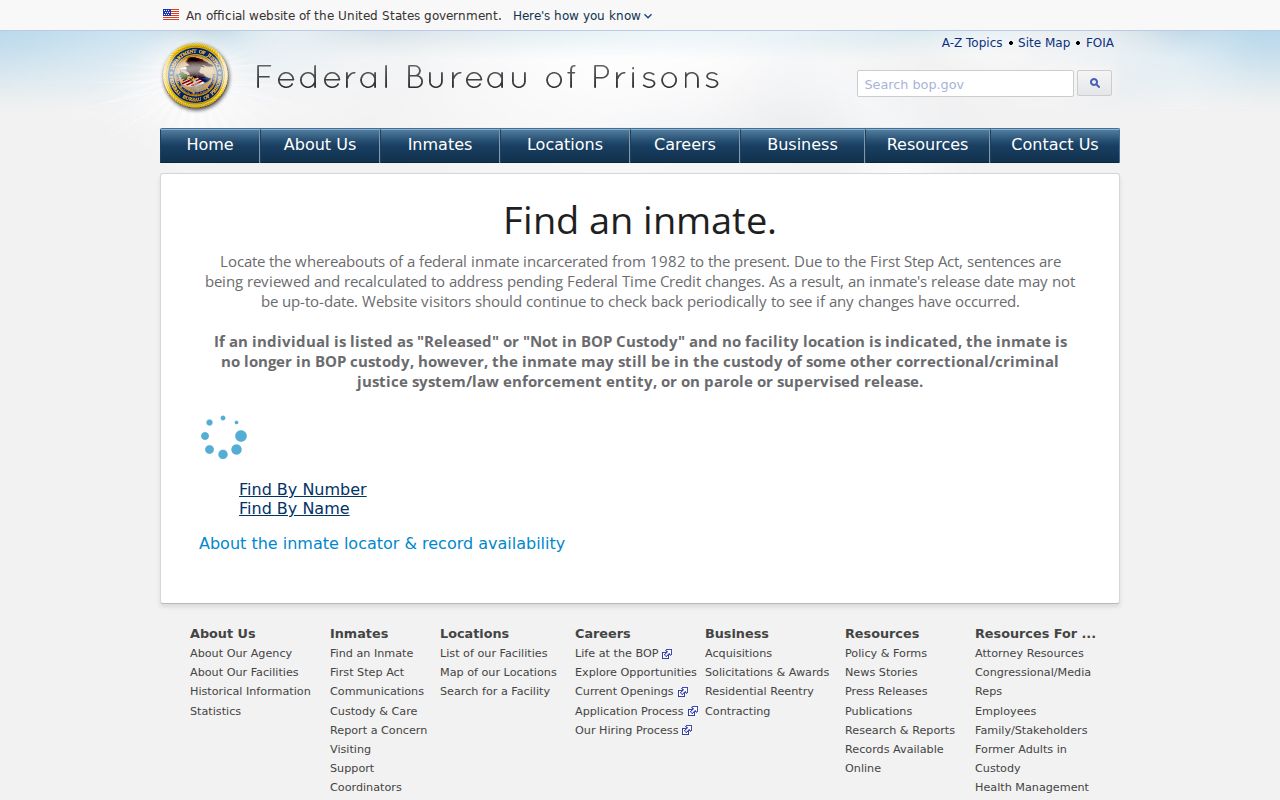
A federal result reports location and release information, but a released status does not rule out county custody, state custody, or supervised release.
Public Access Laws in Nebraska
The Nebraska Public Records Act grants inspection and copy rights for public records held by state, county, and city bodies. It does not make every line open. Agencies may redact protected identifiers and withhold material covered by an exemption. Criminal-history law separately limits public dissemination of some non-conviction arrest records. The best request names the record, date range, event number, and exact office likely to hold it.
Key Nebraska laws:
Neb. Rev. Stat. §84-712 sets access, response, cost, estimate, and deposit rules.
§84-712.05 lists records a custodian may withhold.
§29-3523 controls public dissemination limits for specified criminal-history information.
§29-2264 governs Nebraska conviction set-asides.
Buffalo County offices must provide public parts that can be separated from protected material. A denial should state its legal basis. Access never permits threats, harassment, retaliation, or misuse of registry data.
Buffalo County Drug Court Records
Central Nebraska Drug Court creates a distinctive Buffalo County record trail. The program serves Adams, Buffalo, Hall, and Phelps Counties across two judicial districts. Eligible people enter voluntarily after approval by the County Attorney and judge. The process lasts at least 18 months and combines treatment, testing, supervision, court appearances, and other conditions. Successful completion can lead to dismissal of pending felony charges.
The Buffalo County Attorney's Drug Court page describes eligibility and the local process.
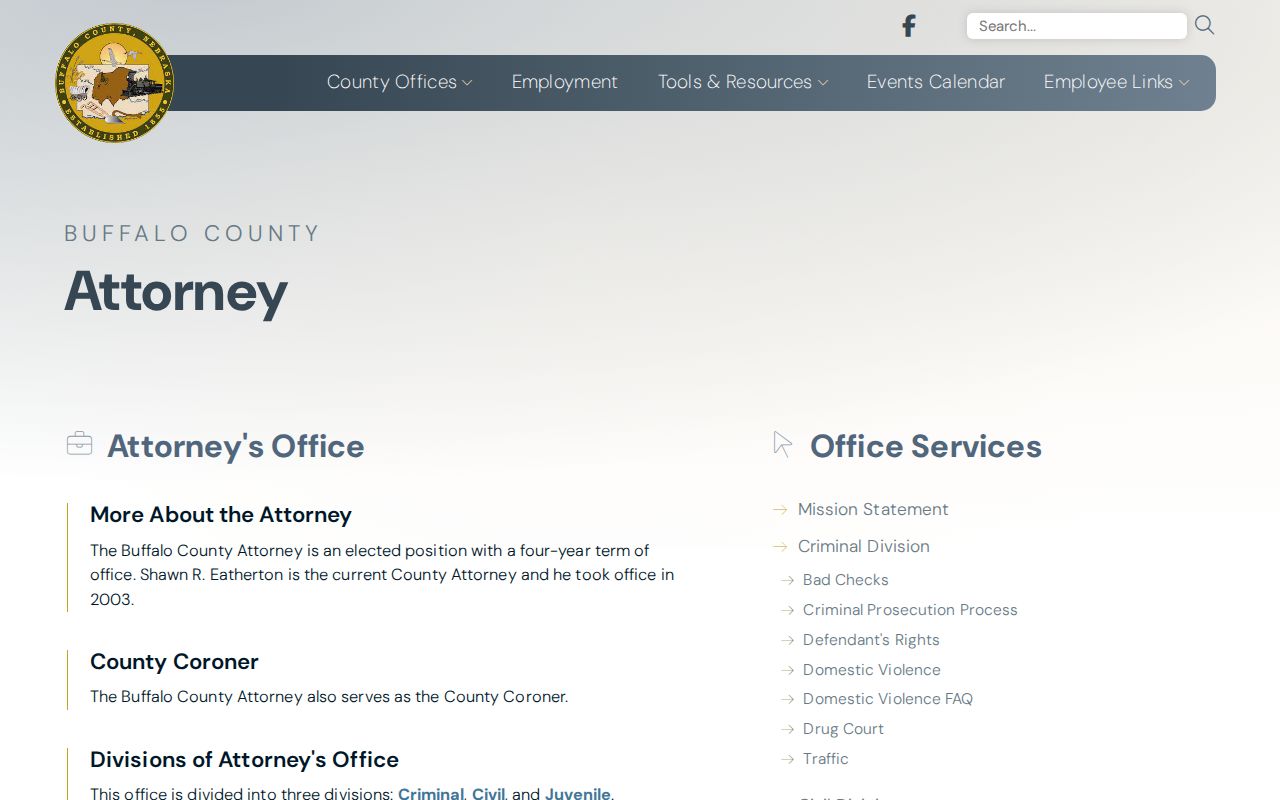
Application is generally due soon after District Court arraignment. The initial booking and charge can remain visible in their source systems even when the final court outcome changes, so a reader should follow the case through disposition.
Sealed, Expunged, and Restricted Records
Nebraska uses several distinct forms of relief. Juvenile records and sealed matters are kept from ordinary public access. Section 29-3523 also removes certain non-conviction arrest history from public dissemination after defined events or waiting periods. The most common remedy for a qualifying conviction is a set-aside under §29-2264. A set-aside nullifies the conviction for specified purposes and can remove some civil disabilities, but it does not erase or seal the case.
The Nebraska Judicial Branch provides separate instructions for an adult conviction set-aside and adult record sealing. Relief depends on the outcome, sentence, pending charges, registration status, and other statutory limits. A person files in the court that handled the qualifying case.
True expungement is narrow in Nebraska. It can apply when an arrest resulted from law-enforcement error and the petitioner proves the error in District Court. If a cleared item still appears, identify whether it is a court record, an NSP entry, or the originating agency's file, then send the order through that source and obtain a fresh RAP.
Buffalo County Criminal Record Requests
A broad Buffalo County public-record request works best when it names the office. Ask shared KPD and sheriff Records for an incident or accident report. Ask County Court for a misdemeanor file or felony preliminary record. Ask the Clerk of District Court for a felony trial file. Use NSP CID for the statewide RAP. Sending an unassigned request to a general county address can slow the response because each office keeps its own records.
The current county request form appears in an official Buffalo County board packet. It asks for requester contact data, the office holding the record, preferred medium, and a clear description. Nebraska residents receive the first eight cumulative staff hours without a special service charge under the state rule. A custodian may seek a deposit when the estimate exceeds $50.
Within four business days, the custodian must provide access, deny with reasons, or explain why more time is needed and give an estimate. The requester then has ten business days to accept, narrow, or withdraw the request. Routine reports can be faster through P2C or the direct Records desk.
Buffalo County Supervision Records
Probation and parole are not the same record. Nebraska probation is run by the Judicial Branch, and Buffalo County belongs to Probation District 9. The public court case may show the sentence and later orders, but supervision notes and treatment details are not a public name-search database. Parole decisions and supervision run through the Nebraska Board of Parole and NDCS, with individual files generally restricted.
The Nebraska parole office directory lists the Kearney Parole Supervision Office and its contact route.
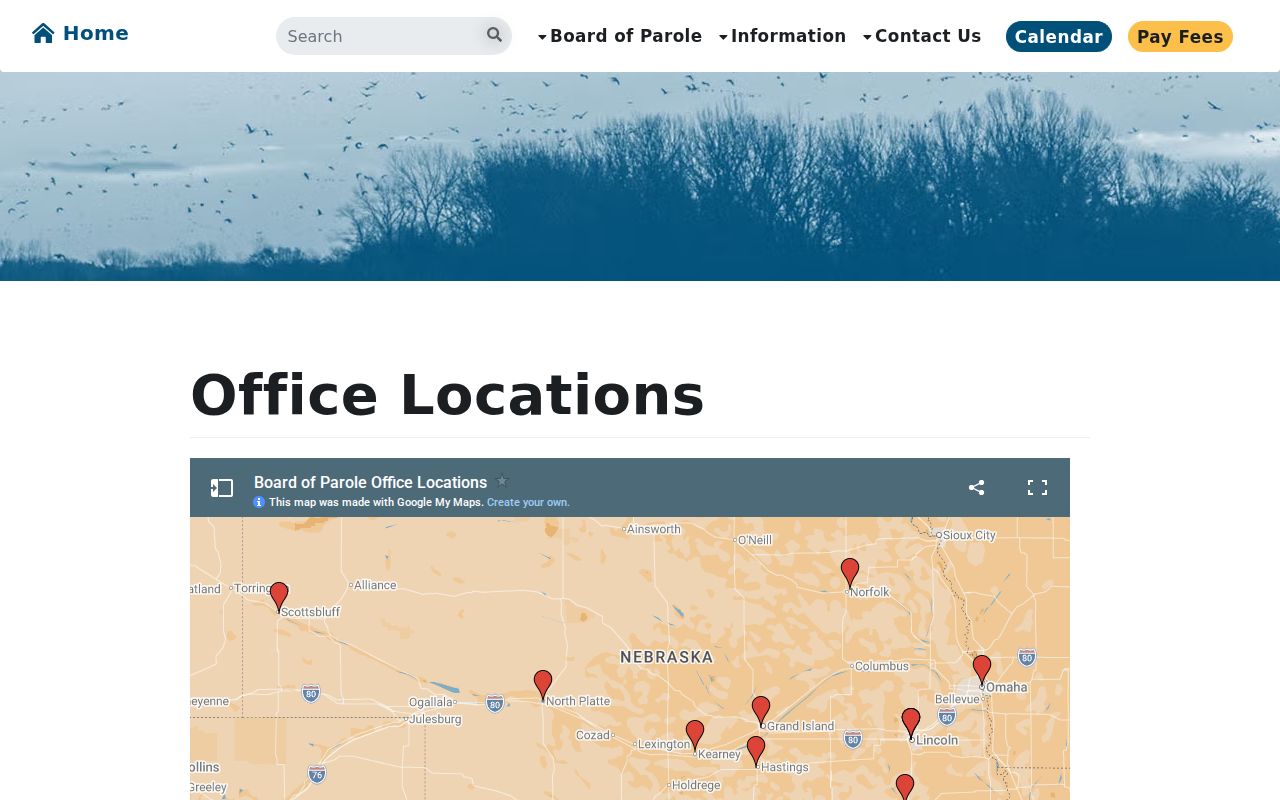
For public status, check the sentencing case and the relevant custody record. Contact the supervision office for lawful process questions, not for confidential case notes.
Buffalo County Criminal Records by City
Buffalo County's three largest incorporated cities use different local record routes. Kearney has its own police department and the shared KPD and sheriff Records Unit. Gibbon contracts with the Buffalo County Sheriff and has no standalone police department. Ravenna maintains a police department, but its filed criminal and ordinance matters still go to Buffalo County courts. Nebraska has no separate municipal courts for these cities.
Kearney Criminal Records
Population 33,792 in the 2024 certified table. KPD reports use shared Records and P2C.
Gibbon Criminal Records
Population 1,878. Sheriff contract policing routes reports through county channels.
Ravenna Criminal Records
Population 1,441. Ravenna PD starts city report requests; court files remain county records.
The ranked set comes from Nebraska's December 2024 certified population report. Each city page keeps the city-specific request route at the center while sending jail and court searches to the shared Buffalo County systems.